Sambal Bajak
In this recipe
About this recipe
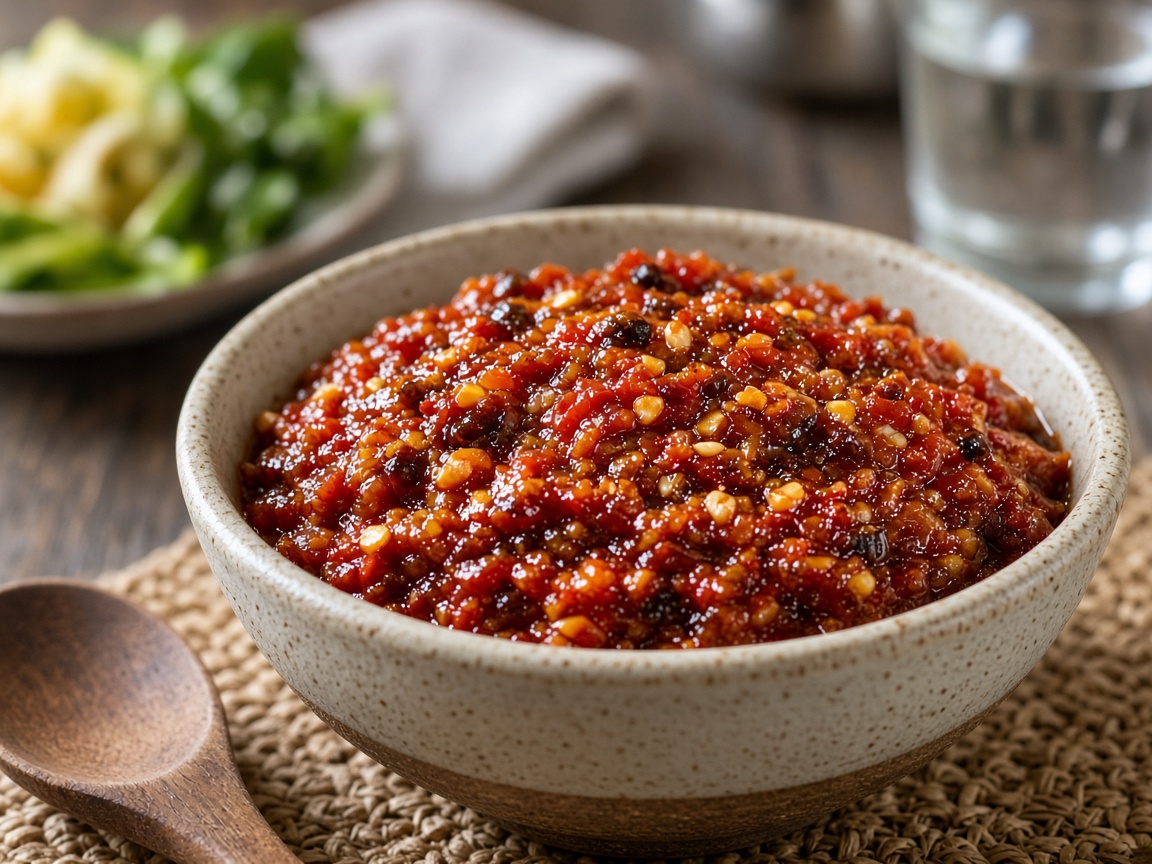
Sambal Bajak is a fried Javanese chili relish cooked until the oil separates—deeper, sweeter, and longer-keeping than fresh sambal matah.
Mothers often make a jar on weekends to spoon over fried fish, eggs, and tempeh all week.
Cook it thoroughly. The goal is a glossy sambal with visible oil, not a watery chili stew.
Prep & cook time
- Prep10 minutes
- Cook10 minutes
- Total20 minutes
- Servings8 servings
- LevelEasy
Tools you need
- Frying pan
- Blender or mortar
- Clean glass jar
Ingredients
- 15 red chilies
- 8 shallots
- 4 cloves garlic
- 2 tomatoes
- 1 teaspoon toasted shrimp paste
- 1 teaspoon sugar
- 1 teaspoon salt, or to taste
- 80–100 ml oil
Directions
- Fry or sauté chilies, shallots, garlic, and tomatoes in a little oil until wilted and lightly colored.
- Pound or blend coarsely with shrimp paste—keep some texture.
- Return to the pan with the remaining oil. Fry, stirring, until the sambal darkens slightly and oil pools on the surface.
- Season with sugar and salt. Taste; it should be spicy, savory, and lightly sweet.
- Cool completely.
- Store in a clean glass jar in the refrigerator.
Kitchen tips
- Use enough oil—this is a fried sambal, not a steamed chili puree.
- Cool before sealing the jar to avoid condensation.
- Always use a clean, dry spoon to scoop.
- Milder red chilies make a family-friendlier jar.
Serve with
- Fried fish
- Eggs
- Tempeh and tofu
- Warm rice
How to store
Refrigerate in a clean jar up to 2 weeks. Keep the surface covered with a thin layer of oil.
Common mistakes
- Undercooking so the sambal spoils quickly and tastes raw.
- Too little oil, which shortens shelf life and dries the texture.
- Storing while hot, which creates moisture and mold risk.