Konro
In this recipe
About this recipe
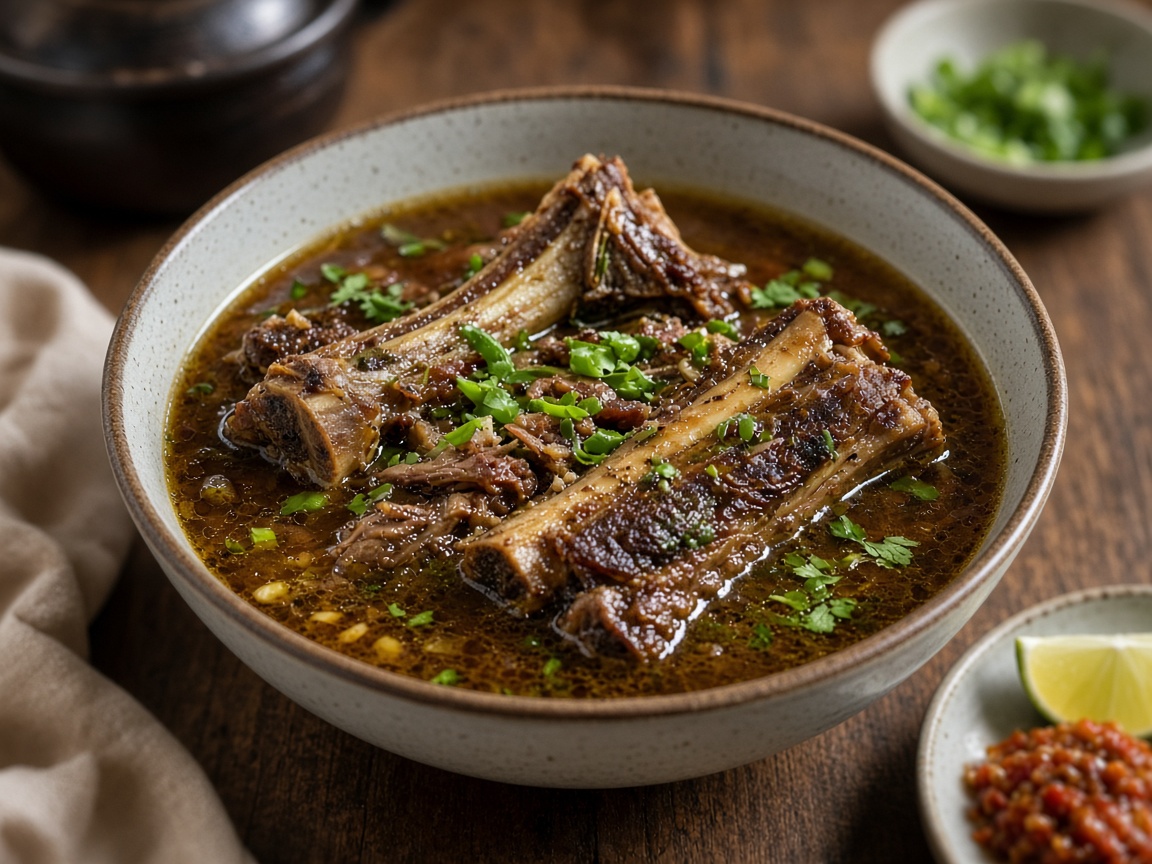
Konro is Makassar’s beef-rib soup with a dark, sweet-spiced broth from keluak or kayu konro and warm aromatics.
Cook the ribs until the meat almost leaves the bone. The broth should be glossy and deeply savory-sweet.
You can also reduce the seasoning and grill the ribs for konro bakar—same spices, different finish.
Prep & cook time
- Prep20 minutes
- Cook2 hours 10 minutes
- Total2.5 hours
- Servings5 servings
- LevelMedium
Tools you need
- Large pot
- Tongs
- Ladle
Ingredients
- 1 kg beef ribs
- 4 keluak nuts or konro spice mix / kayu konro as available
- Shallots, garlic, coriander, galangal, lemongrass, lime leaves
- 2 tablespoons palm sugar
- 2 teaspoons salt
- 2 L water
Directions
- Cover ribs with water and simmer until tender, about 1.5–2 hours, skimming as needed.
- Prepare and sauté the konro spice paste (including keluak if using) until fragrant.
- Add the paste, palm sugar, and salt to the ribs.
- Simmer until the broth is dark, fragrant, and well seasoned, 20–30 minutes more.
- Taste for balance between sweet and savory.
- Serve hot with rice, or grill drained ribs brushed with reduced spices for konro bakar.
Kitchen tips
- Ask the butcher to cut ribs into manageable pieces.
- Chill the broth and lift fat if you prefer a lighter bowl.
- Palm sugar should round the flavor, not turn the soup into dessert.
- Serve with sambal and lime for brightness.
Serve with
- Warm rice
- Sambal
- Lime
- Fried shallots
How to store
Keeps 3 days in the fridge; freezes well. Reheat gently so the meat stays moist.
Common mistakes
- Serving before the ribs are truly tender.
- Over-sweetening the broth.
- Burning the spice paste before it enters the pot.